
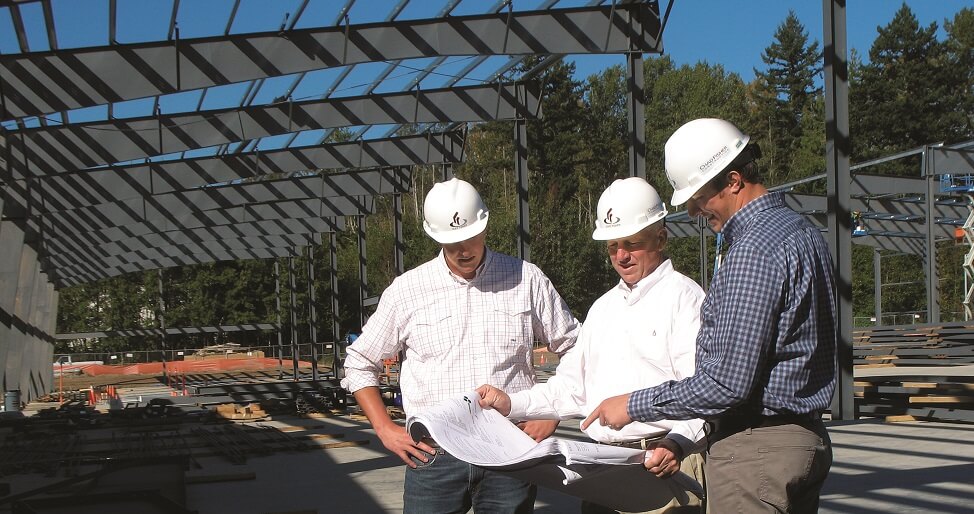
When planning a commercial construction project, experience and a great team are essential. The margin of error is often minuscule, so accurate projections and careful preparation are paramount. The primary steps for a successful commercial construction project consist of six key phases.
What Are Commercial Construction Projects?
Commercial building projects are any kind of construction project that involves structures intended for commercial use. For example, these projects could include anything from retail spaces and office buildings to medical facilities, warehouses, and more.
Commercial construction is overseen by a general contractor company. The general contractor must be a commercial contractor, as opposed to a residential one. While many companies have experience in both fields, they are only able to serve one function. It is best to choose a local general contractor from the area you intend to build in.
What Are The 6 Phases Of A Commercial Construction Project?
The six phases of a commercial construction project are:
- Conception
- Development and Pre-Design
- Design
- Pre-Construction
- Procurement
- Construction
These phases cover everything you need to consider before, during, and after your commercial construction project.
Conception
The conception stage lays the foundation for the whole plan. Therefore, it is one of the most important steps in the project. Much like the eventual building your contractor will construct, the foundation is the piece that holds up the entire project.
At this stage, the client comes up with the ideas for the building or facility they want to be built. They need to lay out a rough idea of the project including the location, budget, and general design and features.
The budgeting aspect of the development of your project consists of understanding the general costs involved in bringing your project to fruition. So, it’s important to work with a reliable construction manager to help you avoid going over budget.
In the conception stage, the client will choose a contractor and architect – or a commercial construction company provides both through the design-build method. This is often a much more cost-effective option.
Development and Pre-Design
A few of the pre-design steps could carry over from the conception stage, such as getting in contact with a general contractor, if you haven’t done so already. The pre-design stage involves outlining the needs of the project.
The sorts of needs discussed can include things like the:
- number of rooms in the building
- size of the rooms
- materials needed for construction along with their associated costs
- and the estimated timeline for how long the project will take
Once you’ve come up with the needs of your project, your contractor will be able to estimate the cost of the project and work out a timeline. They will address each of your needs in preparation for the design stage.
Design
At this stage, the team draws up detailed plans and schematics for the project. Following that, they will get to work on verifying that the plans will yield a successful construction.
A mechanical engineer verifies the designs for the internal structures, such as the ventilation system. A civil engineer will design the connections to existing infrastructure, such as roads and parking bays. An electrical engineer designs the supply of electricity throughout the building, and a structural engineer will verify the structural integrity and safety of the building.
Pre-Construction
Having now drawn up plans for the various elements that make up your project, the pre-construction stage revolves around the finalization of key details. For example, obtaining the right permits and finishing up the legal documentation such as construction permits and insurance agreements for the workers on site.
If you are using the traditional or design-bid-build methods, you will also take vendor bids at this point to ensure the project falls within budgetary limits.
Procurement
This stage touches on the acquisition of materials, tools, and equipment for the project. This step is essential to get right, lest the budgetary allocations do not line up. Sacrificing quality for cost-effectiveness isn’t always the right way to go. Striking a balance between the two is a key part of the process, albeit difficult to manage.
A general contractor will be equipped to handle the procurement phase. It is important that the contractor communicates with the rest of the team to ensure everything flows in the construction phase.
Construction
At this point, the final step is to undertake the construction process itself. Prioritizing the various preparation elements reduces the likelihood of delays and setbacks. Preparing the site for construction will ensure workplace safety and structural integrity.
Following this, your contractor and their team will start work on building your project.
Conclusion
The primary steps for a commercial construction project may seem straightforward, but that doesn’t make them any less important. Balancing cost and quality, ensuring documentation is in order, budgeting beforehand, and ensuring safety in the workplace are all key to taking your project from inception all the way to being open for business.
The best way to ensure success is to hire an experienced and reliable local contractor to help you navigate all aspects of your project.