
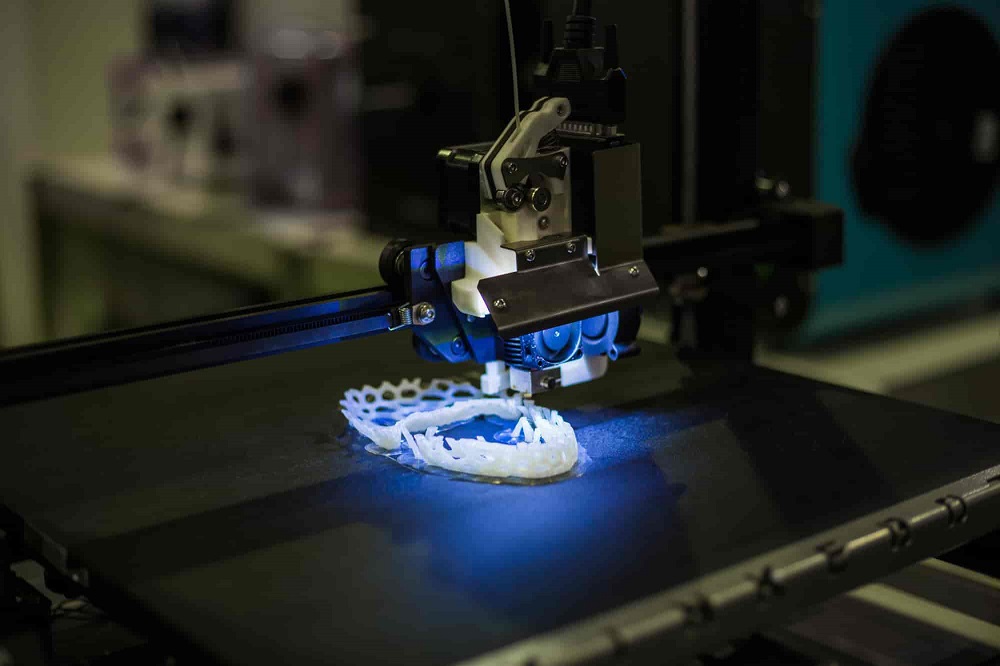
For years, the construction industry chugged along, making changes slowly as the industry expanded and technology developed. One such development occurred in the form of 3D printing.
This technological construction form came into existence in the 1980s. It has increasingly received attention from the construction industry for its potential uses. Although still largely unexplored given the relatively slow nature of change in the construction industry, the possibilities for 3D printing continue to grow.
How Construction Happens
We thought it might be helpful to first outline how additive manufacturing occurs. An automated, computer-controlled machine will melt down metal or use powdered solids. Then, it emits and fuses the materials together layer by layer.
Through this process, it produces physical objects one layer at a time following guidance from digital 3D models.
The types of possible products created from 3D technology are almost endless. These potential uses are possible thanks to:
- A broad array of suitable initial raw resources such as ceramics, mortar, concrete metals, and polymers.
- More design freedoms.
- Simplicity to create objects and tools of all matters of complexity at a low cost on demand.
- Production occurring through automated processes.
Potential Outputs Of 3D Printing
There are currently three types of 3D printing. These include material extrusion, powder bonding, and wire arc additive manufacturing (WAAM).
These processes can design outputs such as:
- Buildings
- Bridges
- Printed molds
- Building components
- Architectural models
- And interior design
Although the outputs listed above have varying levels of sophistication, they all show promise. Up until now, company outputs have limited construction via 3D printing to small-scale buildings. Although, some have gone a step further.
Constructors of bridges have been able to appreciate the benefits of the properties of metals and concrete to create pedestrian bridges.
Architects have experienced the benefits of printing molds that are well-priced and quick to prepare. They also use 3D printing, supplemented with technologies such as CAD, to add in power sockets, joints, and partition walls.
5 Ways 3D Printing Could Change The Construction Industry
Reduce Supply Costs
3D printing, also known as additive manufacturing, has numerous benefits. The first point to highlight is the shortening of the supply chain. With 3D printing and rapid prototyping, all of a sudden products can be available much sooner. Time, money, resources, and more.
Rather than the usual occurrence of builders and general contractors ordering in bulk, 3D printing facilitates more precise processes. These processes become more sustainable due to less waste. Thus, 3D printing is better for the environment.
It also means lower costs for contractors. General contractors and companies could also expect to save up to 50% of the usual cost of building a house. The benefits are plentiful and construction managers have less to worry about regarding their budgets.
Greener Construction
Traditional concrete construction has an environmental knock-on effect that is receiving more and more awareness. Advancements in technology helps avoid these negative effects as it reduces waste outputs by 30 – 60%.
In addition, using these methods means using less lumber in setting up initial housing structures. This step serves as an advancement for companies with mandates around greener construction processes.
Improved Planning
Unlike typical construction projects that last anywhere from several weeks or months, 3D printers can significantly reduce the time it takes to complete a project.
The high technological capacity of 3D printing allows teams to quickly identify all the steps needed to complete the design. This technology opens avenues to immediately spot any potential issues and possible solutions.
Thanks to this fast turnaround time, construction becomes far more efficient and operations run smoother. Contractors can fulfill more orders for more clients and keep business moving.
Safer Employees
Employees are noticeably safer in environments where 3D printing is used. Concrete can be hard work and time consuming. 3D printing, on the other hand, is much safer and requires less labor.
Everything becomes that much simpler, both for employees and employers. Less risk means less liability, less paperwork, and more satisfied employees working in safe environments.
Innovative Points of Entry
3D printers can open up whole new avenues for construction industries to enter and transform construction as we know it.
This type of equipment can offer a unique selling point against competing companies that may not keep up.
Issues To Unpack
Although some practicalities of 3D printing need fixing, one can almost imagine the construction industry holding its breath. Some of these issues include:
- Technological level of sophistication for building
- How companies can make the most of this technology and adapt
- Industry response to 3D printing as a disruptive innovation
Final Thoughts
The construction industry grows increasingly dependent on automatic processes. This is because they help projects stay on time and under budget while delivering quality results. Because of this, 3D printing is becoming more and more popular in the construction industry.
Contact Chad Fisher Construction to find out what new technologies we make use of and our thoughts on 3D printing. We have a skilled team on hand to answer all your questions.