
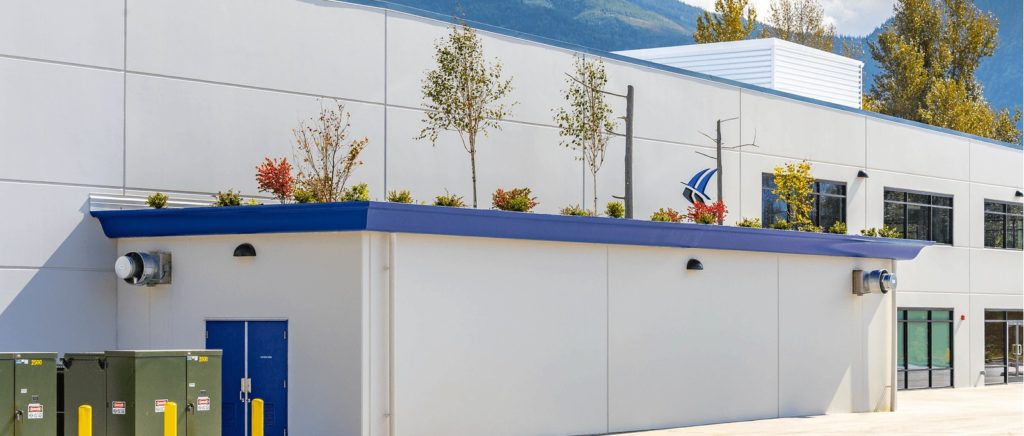
‘Going Green’ trend has been around for a while now. Over the last decade, innovations in the development of construction materials, technology, tools and practice are evolving at a rapid pace.
At Chad Fisher Construction, we are dedicated to implementing sustainable resources into projects when and where it makes sense for greater good of the client and their project.
Construction Practices For A Green Future
With sustainable practices on the rise, the construction industry is well on its way to contributing to a sustainable future.
Here are just a few of the ways that we are making positive changes and reducing unnecessary construction waste.
Recycling
Construction waste is one area that can be leveraged to improve sustainable practices and reduce costs of projects. In the US one-third of refuse is made up of construction waste.
This is why recycling is important. When building, it’s possible to gather the already generated waste and find sustainable ways to reincorporate it back into the building. Recycling does not have to mean that you have to send your waste to a recycling plant. Rather, find creative ways to reincorporate them.
Recycling also starts at the construction site through the use of already recycled materials. Steel is an excellent building material and it can easily be recycled, reshaped, and used again for a new structure. By doing this, the construction industry can ensure that no usable materials go to waste.
When starting at a new construction site, look at using existing aspects rather than breaking down everything and starting over. This does not necessarily have to be the entire building but aspects of it such as doors, windows, pipes, and so forth.
This allows us at Chad Fisher to continuously find new and innovative ways to build toward the future.
HVAC and Temp Control Systems
The heating and cooling of your building are of utmost importance. It helps maintain environmental conditions at the optimal levels. But, traditional air conditioning and heating systems aren’t very energy-efficient.
On average, air conditioners use between 3000 to 5000 watts of electricity. This has a significant impact on the environment and the carbon footprint of the facility.
At Chad Fisher, we prefer to make use of the HVAC air conditioning and temperature control system. This system significantly reduces your carbon footprint while still maintaining optimal environmental conditions.
It also helps to circulate air, allows you to track the conditions through remote monitoring, and pre-emptively identifies any issues. This saves time, resources, and energy.
The system self-regulates so it will be able to cut off when it’s not needed and function again when necessary. This makes it more energy-efficient while still providing comfort to the inhabitants of the building.
Energy Efficient Construction And Solar Power
It’s no secret that construction sites make significant use of energy to be able to function. Thus, the world of energy-efficient construction is becoming a popular idea in the construction industry.
Energy-efficient buildings are designed to heat and cool independently of the energy and equipment that were chosen to heat and cool the building. An example of a building that Chad Fisher has constructed in this way is Bay Baby with its 99-kilowatt solar system.
Solar power is an excellent way in which the construction industry is preparing for a sustainable future. With more buildings powered with solar energy, there will be a great decrease in energy consumption.
When it comes to energy-efficient construction, there are several factors that can contribute to a building’s energy usage. These include the orientation of the structure, as this determines the amount of sun exposure and heat the building may face, as well as the window and door placements, overhangs, and insulation.
Proper insulation is also very important to consider for HVAC systems. It ensures the facility is sealed off from drafts – meaning that the temperature control system doesn’t have to work as hard or use as much electricity.
Final Thoughts
For construction companies, the impact of industry practices on the environment can no longer be ignored. Contributing to sustainability can be as simple as replacing outdated and toxic materials with more sustainable or recycled materials.
By simply following the ‘recycle, reduce, and reuse’ principle, the construction industry can already make a difference.
At Chad Fisher Construction, we realize the importance of lowering our carbon footprint. This is why on our road to a sustainable future we have already started investing in more eco-sustainable buildings. Take a look at our projects including The Janicki Industries Clean Room, Janicki Aerospace Manufacturing, and Sakata Seed Company for more information on how we are industry leaders when it comes to finding innovative ways to reduce energy costs while implementing creative solutions. Or, contact us today to find out how we can help yo