
In the construction world, using innovative tools is essential for success. Advanced project management software and cutting-edge construction technologies are changing the game. These tools make everything run more smoothly and increase productivity. Thus, they help projects get better results.
They allow for detailed planning, real-time collaboration, and efficient use of resources, ensuring that projects stay on schedule and within budget. By reducing mistakes and the need to redo work, these innovations lead to higher-quality construction and greater satisfaction for everyone involved. Adopting these advanced tools sets new standards for efficiency and excellence in the construction industry.
This guide will explore how innovative tools are transforming construction projects. By the end, you will understand how these advancements enhance efficiency, quality, and overall project success.
5 Ways Innovative Tools Are Improving Construction Projects
Enhancing Communication
Communication is at the core of successful construction projects. Collaboration and cloud computing platforms have revolutionized how construction teams share data, collaborate on projects, and communicate. They provide real-time collaboration tools with powerful document management features and project tracking capabilities. This keeps team members connected no matter their distance from one another.
Cloud-based solutions minimize communication errors. They enable real-time access to project updates and crucial data. This allows for seamless communication between stakeholders.
Better Budgeting
Innovative tools like Building Information Modeling (BIM) are critical in improving construction project budgeting. BIM offers a comprehensive digital representation of the building process. It enables engineers, architects, and other construction professionals to collaborate effectively.
BIM lets teams visualize the entire project in 3D. This way, they can identify potential conflicts, and make informed decisions during the design phase. As a result, teams can minimize costly errors and rework risks, which keeps projects within budget.
Additionally, BIM includes detailed information about materials, labor, and costs. This allows for more accurate budgeting and financial planning.
AI and machine learning are other innovative tools for improving budgeting. These technologies can be used to analyze huge amounts of data. Leveraging construction data can help predict costs and identify potential budget overruns before they occur. On the other hand, AI provides real-time insights into project finances. This helps streamline procurement processes, optimize resource allocation, and enhance project management.
Improving Safety
Safety is integral in construction. And innovative tools have made significant strides in ensuring optimal worker safety.
Wearables, such as smart helmets and vests equipped with sensors, can monitor environmental conditions and workers’ vital signs in real time. They detect an array of potential hazards, such as harmful gas levels and high temperatures. They then alert supervisors and workers to take immediate action.
A proactive monitoring approach like this is critical in preventing potentially fatal accidents and ensuring a safe working environment.
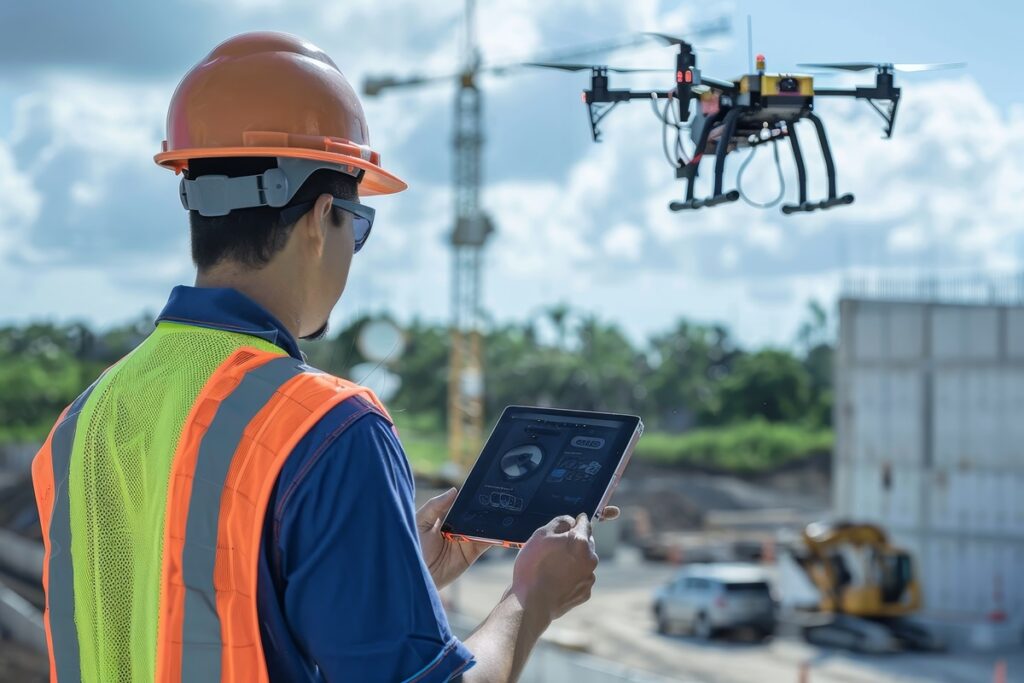
Drones are another technology companies are embracing for better safety in construction. They survey and inspect sites, which means workers don’t have to do risky jobs up high or in dangerous places. Some drones carry top-notch cameras and LiDAR sensors to gather data and build detailed 3D models. This enables project monitoring, enhances safety, and ensures maximum project quality.
Boosting Project Visualization
Digital twins technology has transformed the way construction projects are visualized. A digital twin develops a virtual model of the physical structure, which provides real-time data about its performance.
The technology allows those involved in the construction to monitor and optimize their operations throughout the building process. The technology simulates various scenarios. As a result, construction teams can identify potential problems and allocate resources more efficiently. This detailed, real-time visualization level enhances decision-making and results in project success.
Augmented Reality (AR) and Virtual Reality (VR) are game-changers in project visualization. AR overlays digital information in the real world. It provides workers with immediate access to critical data on-site. This helps them understand complex projects better and improves accuracy.
VR technology immerses stakeholders in a virtual reality environment that allows them to review project designs and explore every detail of the construction before they even begin to work on it. This immersive experience makes it easier to spot potential issues early. It also offers valuable feedback that ensures the end construction matches up with the original vision.
Enhancing Sustainability
Sustainability is one of the key areas in which innovative tools are making a difference. Today, sustainable building materials such as recycled steel, cross-laminated timber, and low-carbon concrete are on the rise. These materials are eco-friendly, boost a building’s energy efficiency and durability, and help reduce its carbon footprint.
Renewable energy integration is another key trend in sustainable construction. Wind turbines, geothermal systems, and solar panels are now incorporated into building designs to minimize reliance on fossil fuels and generate clean energy. They also lower energy costs.
By adopting sustainable practices and technologies, construction teams contribute to a greener future and meet the growing demand for environmentally responsible construction.
Conclusion
Innovative tools are revolutionizing the construction industry as we know it. They have altered nearly every aspect, from communication and budgeting to safety and sustainability. Using them makes construction projects more precise, cost-effective, and efficient while improving final build quality. They also ensure projects are completed on schedule and within budget.
As this industry evolves, adopting such technologies will become even more vital for businesses that want to remain competitive.