

Are you considering an remodel of your commercial warehouse or perhaps building a new one? Market conditions are always evolving and the demand for more efficient operations continues to be a high priority. New, innovative designs that maximize space, improve efficiency and also factor in eco-friendly choices are becoming more popular.
We explore a range of commercial warehouse design and layout ideas that can take your business to the next level. Whether you are looking to build a new warehouse or revamp an existing one, these suggestions will equip you with the latest design ideas to consider.
5 Commercial Warehouse Design Ideas & Considerations
1. Define Your Objectives Upfront
One of the most important steps you can take when designing a warehouse is to clearly outline your design objectives. These objectives could be at quite a high level, such as reducing overall costs or providing the best possible customer service. They could also be far more specific, such as making the warehouse space as flexible as possible.
When you define your objectives upfront, you’ll always have them in mind throughout the design and building process.
2. Consider Your Ideal Warehouse Layout

Every business has its own unique set of needs, this includes operational processes and goals. However, there are a few common commercial warehouse layouts that suit a variety of needs. These are:
- I-Shape: This is the simplest layout. You can have your storage area spanning a straight line along the center of the warehouse with incoming and outgoing shipping areas at either end.
- U-Shape: This layout is suitable for businesses that require a lot of storage as well as easy access to materials. Designed in a U-shape, you can have incoming and outgoing shipping areas at each end of the U with storage in the middle area.
- L-Shape: For smaller warehouses needing to maximize space, this might be the best layout. Storage is placed in the corner of the L-shape with incoming and outgoing shipments on either side of the L.
Alternatively, you can take a custom approach to the design of your warehouse to align the infrastructure to your specific requirements.
Custom layouts allow businesses to utilize storage in a way that caters to specific product sizes, shapes, and weights. Plus, tailored designs can help with the flow of goods, from receiving to dispatching. This will reduce handling times and improve speed.
3. Choose Sustainable Design Options
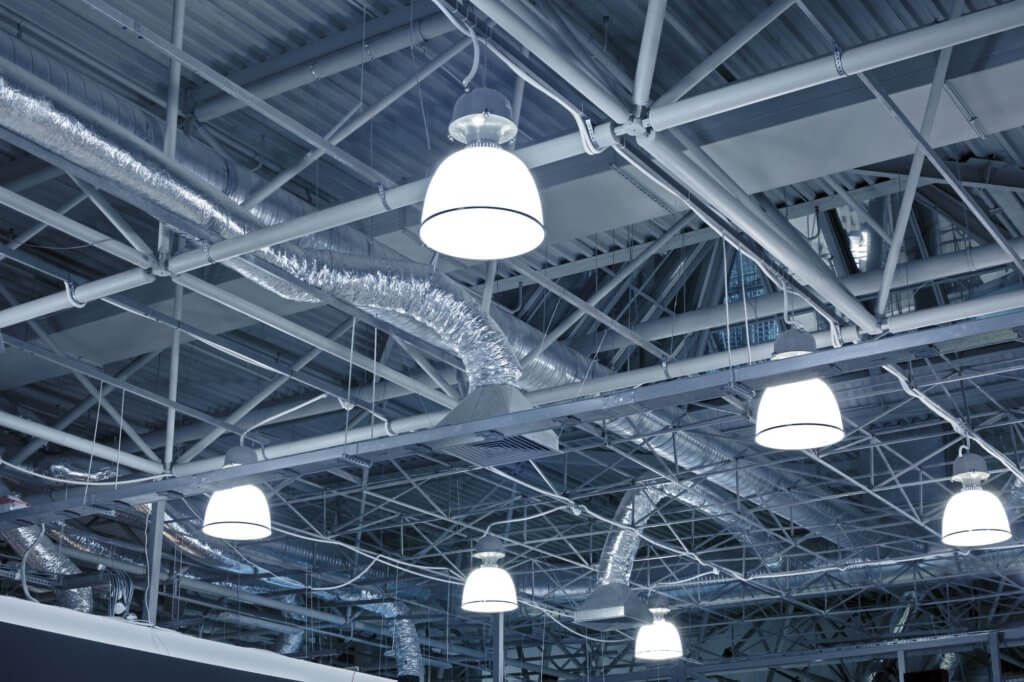
If you’re really looking to improve your warehouse design, you can take eco-friendly design solutions into consideration within your plan. These design choices help to reduce businesses’ overall environmental impact and also offer some important cost-saving benefits over time.
Some of the best tips include using steel made from recycled materials. This material reduces the carbon footprint associated with the creation of new steel. Another good option is to use low-VOC paints. These reduce the emission of volatile organic compounds, improving indoor air quality.
You might also want to consider skylights and translucent panels. Both skylights and translucent panels are modern options that can reduce the need for artificial lighting during daytime hours (thereby conserving energy).
4. Enhance The Building Envelope
The building envelope, also known as the building shell, encompasses all the exterior components of a building – the walls, roofs, windows, floors, and doors.
You can make the entire structure more energy-efficient, durable, and comfortable with specialized design choices.
Some of the ways that an optimized building shell can enhance your warehouse include:
- Ensuring consistent indoor temperatures
- Protecting from moisture and pests
- Minimizing pollutants from the outdoors
- Reducing energy bills
You can also make sure heat doesn’t escape or enter by using materials like fiberglass, cellulose, or foam. Something else you might want to consider is sealing gaps, even small ones, around doors and windows.
By choosing “green” roofs or cool roofs, the entire warehouse can be made to reflect sunlight and absorb less heat, resulting in cooler building interiors. Reflective finishes can also accomplish the same thing.
5. Integrated Loading And Unloading Space
Lastly, consider if there is enough space to build the loading and unloading areas directly next to the warehouse. This warehouse design idea will enhance efficiency as it eliminates the need for additional transport or detours to and from loading bays.
Conclusion
In today’s competitive environment, it’s important to get the design and efficiency of your commercial warehouse correct. During the planning stage, you need to consider how products are stored, accessed, and dispatched, as well as how the entire environment is regulated and designed.
As we’ve discussed above, choosing more sustainable design choices, enhancing the building envelope, and considering the interior layout, are all parts of the process if you want to achieve an ideal warehouse.
If you’re looking to design a new warehouse, Chad Fisher Construction has the expert guidance you need. We’ve been serving the Pacific Northwest Region for more than 40 years and understand the importance of consistent service, professionalism, and working with you to achieve your specific goals.
Contact us today for a quote and to get started on your new warehouse project.