
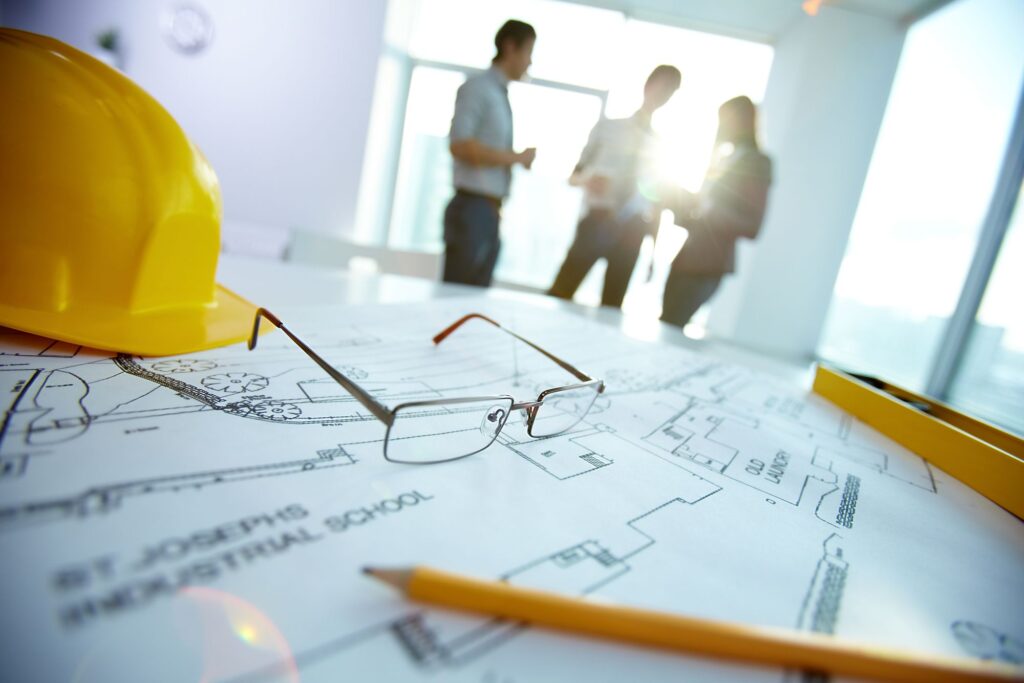
Delays are a major issue in construction projects, with the majority of projects finishing over schedule and over budget. However, there are steps you can take to avoid common delays and keep your construction project on schedule.
Follow these seven tips to make sure your construction project runs smoothly and efficiently.
Ensuring Commercial Construction Project Efficiency From The Start
1. Develop A Comprehensive Plan
The key to avoiding common construction delays lies in the pre-planning process. Your plan must include timelines, measurable goals, a well-reviewed budget, and an analysis of potential delays. The more thorough your plan, the more likely you can avoid and minimize delays.
To set yourself up for success, be sure to go through our comprehensive list of pre-construction questions, covering everything from project planning and quality control to risk and safety management.
2. Work With The Right People
The team you work with is instrumental in getting a construction project completed on time. This starts with choosing the right contractor. Contractors like Chad Fisher Construction leverage expertise in construction project management to help avoid construction delays.
Once you have your contractor, they can handle things like architects for plans, suppliers for materials, and workers for laborers. Contractors will have experts and sub-contractors in the area that they regularly work with.
Your contractor will also be able to help with all of the tips on this list so you have support in avoiding construction delays.
3. Create A Realistic Timeline
One common issue in construction is having an overly optimistic timeline. When putting together your timeline, be mindful of the fact that everything takes longer than you think it will.
You need to predict potential delays and build in float time. In project management, float time refers to the amount of delay that can occur without impacting the project deadline.
In your timeline, be sure to include checkpoints for approval. Some delays occur after a task is finished but before it has been approved. By identifying checkpoints in advance, you can plan around the need for approval.
4. Manage Blockers And Dependencies
In project management, some tasks are known as dependencies because they can only be actioned once another task has been completed. And in construction, blockers are tasks that need to be finished before the next step can be taken.
So you have to start with your blocker and then move on to your dependencies. Blockers are often responsible for construction delays because any issue with them holds up the entire project.
One way to help avoid delays caused by blockers is to use the critical path method to identify stretches of dependent activities and the time needed to complete them. This is a useful tool to help ensure that you schedule activities in the right order and allocate enough time for them.
5. Draw Up A Careful Budget
Construction delays inevitably mean the project will go over budget, and financial challenges are a major contributor to delays. If you don’t properly account for all of your costs, you will run into challenges.
When putting together a budget, get detailed cost estimates for everything, and review them carefully. If you have set up your pre-project timeline well, you will be able to get multiple quotes and compare them for the best possible prices.
The other crucial aspect of construction budgeting is managing cash flow. It might be beneficial to use financial management software to keep track of costs and invoices.
6. Establish Good Communication
There needs to be a clear communication process and a steady flow of information both up and down the project chain of command. You need to establish regular communication as well as clear protocols.
You need to have guidelines in place for both regular progress updates and urgent issue reporting.
Everyone must be in the loop about the scope of the project, important deliverables, and the timeline. The best plan is useless if people are not actively working towards it. By getting every stakeholder on the same page, you can avert many delays caused by poor communication.
7. Adapt To Delays
The best way to navigate delays in a construction project is to expect them and develop contingency plans. No matter how well-planned your project is, things will go wrong, from slow delivery of materials to torrential rain.
So to stop delays from compounding, have a clear sense of how you will adapt to various delays. Speak to your contractor about how they handle changes to the timeline, budget, or even the scope of the project.
Conclusion
If you want to avoid construction delays, you need to build an excellent plan that breaks down the project scope and has buffers and contingency plans built in. You also need to select a contractor that will work with you to prevent and minimize delays.
For a successful construction project that finishes on time and on budget, get in touch with Chad Fisher Construction today.