
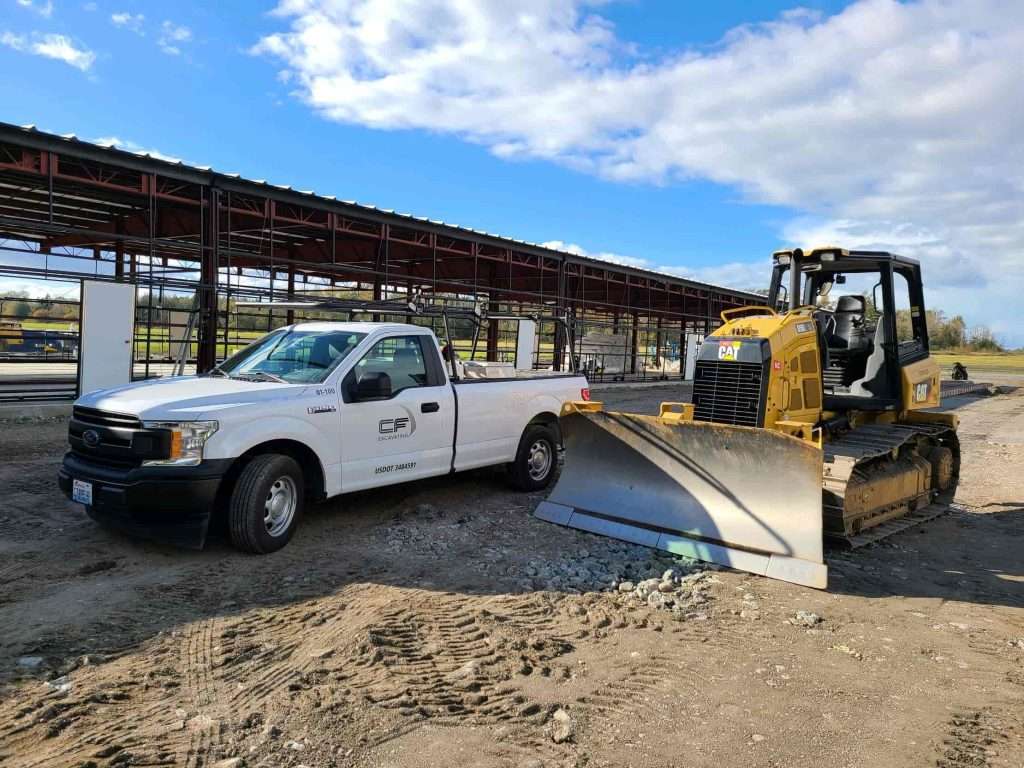
Construction is challenging enough without a steep gradient on a slope or hill. To get the land level, you’ll need grading services. Proper grading of the land will ensure that your construction project, whether a house, a driveway, or even a parking area, is stable and secure.
Of course, there are various factors to consider before grading the land. These include the topography, the potential for flooding, and even the soil erosion statistics of the area. That’s why you need to get it right, right from the start.
What Is Land Grading?
The ground you want to build on will rarely be exactly the right level or slope for your needs. That’s where land grading comes in. But many people confuse land grading with excavation. The two work hand in hand, although they are different stages of the construction or landscaping process.
Excavation is the process of removing and moving soil from one area to another or filling in dips in the ground, to create a more suitable site surface. Grading is the process of sculpting and leveling that out to create a specific slope or an even surface.
This can have several applications including drainage, landscaping, or preparation for construction.
The Benefits Of Construction Grading
Construction grading adapts the site to meet your needs. By sculpting the land to be more level, more sloped, or whatever your particular project requires, you can overcome the obstacles of the lay of the land. Virtually any site becomes usable with the right preparation work and grading.
With construction grading, you’ll enjoy the following benefits :
- Architectural possibilities in uneven areas
- Landscaping in hilly areas
- Better drainage
- Minimized soil erosion
- More secure foundations
Types Of Grading Services For Construction Projects
Commercial construction trends may come and go, but there will always be a need for professional grading. There are various types of grading services for construction projects. Let’s take a look at four of the most common types:
Landscape Grading
Grading for landscaping is often necessary for gardens, patios, decks, and other outdoor spaces. It involves the leveling and reshaping of land to allow for planting and outdoor entertainment. Grading the landscape results in outdoor spaces that are more aesthetically pleasing.
On a more practical note, it also helps to avoid the pooling of water when it rains. Slight sloping leading down to a garden can direct water run-off away from the structure. The water will be diverted to where it will be of better use, away from the driveway and the foundations.
Architectural Grading
Before erecting a building or structure, you must lay a solid foundation. But before that can happen, your building site has to be prepared, excavated, and graded for those foundations.
Foundations need a level area for any type of commercial building. This often requires a certain amount of leveling to get the surface right. It is especially true if the desired location is atop a hill or nestled in a valley. Architectural grading makes building in these tricky areas possible and more importantly, makes the structure more secure.
Grading allows you to build on the right level, with enough sloping for drainage. It is crucial for preserving the structure’s integrity by avoiding potential water damage that would weaken the foundation.
Parking Lot Grading
One area where you can’t afford to have an undesirable slope is a parking lot. For large parking lots housing hundreds of vehicles or more, this is even more important. The safety of your valued staff and clients’ vehicles is your responsibility. An unfavorable slope increases the risk of damage to vehicles.
Parking lot grading helps to create a smooth and level distance over a large area, ideal for multiple vehicles of various types. While an incline is desirable for water run-off during heavy rains and flooding, it should be minimal. Steep inclines are not ideal for parking vehicles all day, every day.
Driveway Grading
Driveways need to be graded too, and gravel ones often need to be re-graded. This is because gravel tends to shift naturally over time and with use.
Potholes and compacted areas can occur on driveways too, increasing the risk of vehicle damage. In adverse weather, this becomes a nightmare, allowing rain to pool and snow to build up in all the wrong places.
That is why a slight incline is best for driveways. A steep incline is not ideal for everyday use. Driveway grading and re-grading help to avoid these common problems and create just the right degree of incline for a driveway.
Conclusion
Grading is essential for commercial construction projects. It sets up the base for a solid foundation and helps to prevent future problems.
For the peace of mind that comes with having secure foundations, contact us today. We’ll get your commercial project off the ground the right way.