
What does your office say about your business? The design of your professional office workspace is more than just a matter of aesthetics. It directly influences productivity, employee satisfaction, and overall company culture.
A well-designed professional office can transform how your team collaborates, stays focused, and feels throughout the workday. From choosing the right layout to incorporating elements that promote well-being, every detail in office space construction contributes to creating an environment that inspires efficiency and creativity.
In this article, we’ll explore essential features that boost productivity, the importance of selecting the right materials, and tips to effectively leverage natural light.
Essential Design Features for Modern Office Spaces
Open Layouts
An open office layout can change how teams interact. By removing physical barriers, you create an environment that encourages communication and collaboration.
For example, this design approach can facilitate spontaneous conversations and brainstorming sessions that can lead to innovative ideas. However, it’s important to balance openness with dedicated spaces for privacy and focused work.
Incorporating areas like quiet zones and meeting rooms allows employees to escape distractions when needed. It makes sure productivity doesn’t take a hit while trying to encourage collaboration.
Flexible Workstations
The traditional concept of fixed desks is evolving as businesses recognize the value of more flexible workstations.
Offering adjustable desks, collaborative tables, and quiet nooks allows employees to tailor their workspace to their needs.
As a result, it can help improve both comfort and efficiency. This adaptability caters to diverse working styles – everyone can work in a way that suits them best.
Break Areas for Employees
Break areas are essential for maintaining employee energy levels and morale. Studies show that excessive mental fatigue during work tasks can result in reduced concentration and impaired attention.
So, taking a step back in break rooms can provide the mind with an opportunity to recharge, and increase cognitive awareness.
These spaces should be designed to offer relaxation and socialization opportunities, allowing employees to recharge away from their desks. Comfortable seating, engaging decor, and amenities (like coffee stations or snack bars) can transform a simple break room into a hub of creativity and rejuvenation.
Choosing Materials That Support a Positive Work Environment
Sustainable Materials
Choosing eco-friendly materials for office construction is a smart and ethical decision. Sustainable options like reclaimed wood, recycled metal, and low-VOC paints promote a healthier work environment and demonstrate a commitment to environmental stewardship.
Employees value sustainability, with 65% considering it when choosing an employer. By using eco-friendly materials, businesses reduce their carbon footprint and align their workspace with these values.
Acoustic Treatments
Noise pollution can significantly disrupt workplace productivity. Implementing acoustic treatments, such as sound-absorbing panels, carpets, and ceiling tiles, can help create a quieter office environment.
These features are particularly important in open office designs, where conversations and other sounds can become overwhelming.
Ergonomic Furniture
Investing in ergonomic furniture is vital for creating a positive work environment. Ergonomic chairs that provide proper lumbar support and adjustable desks that accommodate various working heights are essential components of a healthy workspace.
Employees who feel comfortable in their work environment are more likely to be engaged and motivated. The result? Increased productivity, improved job satisfaction, and reduced risk of workplace-related injuries such as back pain or repetitive strain injuries.
Leveraging Natural Light and Sustainable Elements
Maximizing Natural Light for Enhanced Productivity
Natural light is one of the most significant factors influencing employee productivity and well-being. Designing your office space with large windows and open layouts maximizes natural light.
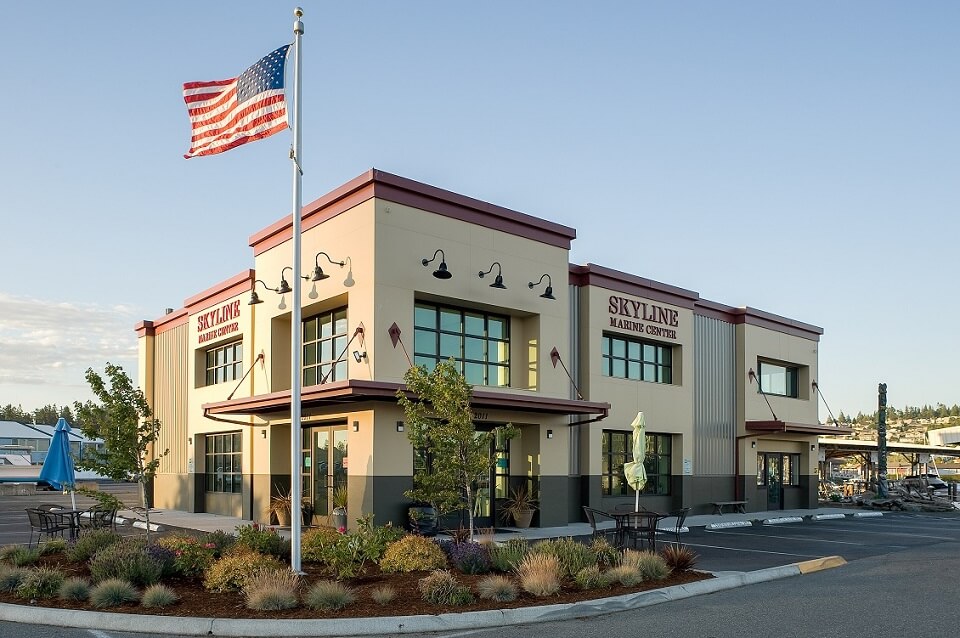
Consider incorporating skylights and glass walls to enhance the flow of natural light throughout the space. The Skyline Village Marine Center is a prime example. It features expansive windows that bring in ample natural light, creating an uplifting and productive environment for tenants.
Incorporating Green Spaces for a Calming Effect
Integrating green elements into office design, such as indoor plants or living walls, can create a calming and visually appealing environment.
Plus, it’s a simple but efficient way to show employees and visitors that you care about creating an inspiring and welcoming environment. For instance, in the Mount Vernon Ventures professional office building project, the use of natural elements helps foster a welcoming atmosphere.
Energy Efficiency: A Smart Investment
Implementing energy-efficient systems benefits both the environment and operational costs.
For example, the 14,000-square-foot Sakata Seed Company office incorporates energy-efficient features with climate-controlled germination rooms. LED lighting, smart thermostats, and energy-efficient HVAC systems reduce energy consumption.
By prioritizing sustainability, companies lower expenses and boost their reputation.
Conclusion
Do you want to start designing office spaces that drive productivity? If you do, simply follow these tips – it’s the key to a smart investment in your company’s success.
By focusing on essential design features, selecting materials that enhance the work environment, and leveraging natural light, business owners can create spaces that boost employee satisfaction and efficiency.
For more expert guidance on office space construction and design, partner with Chad Fisher Construction on your next project.