
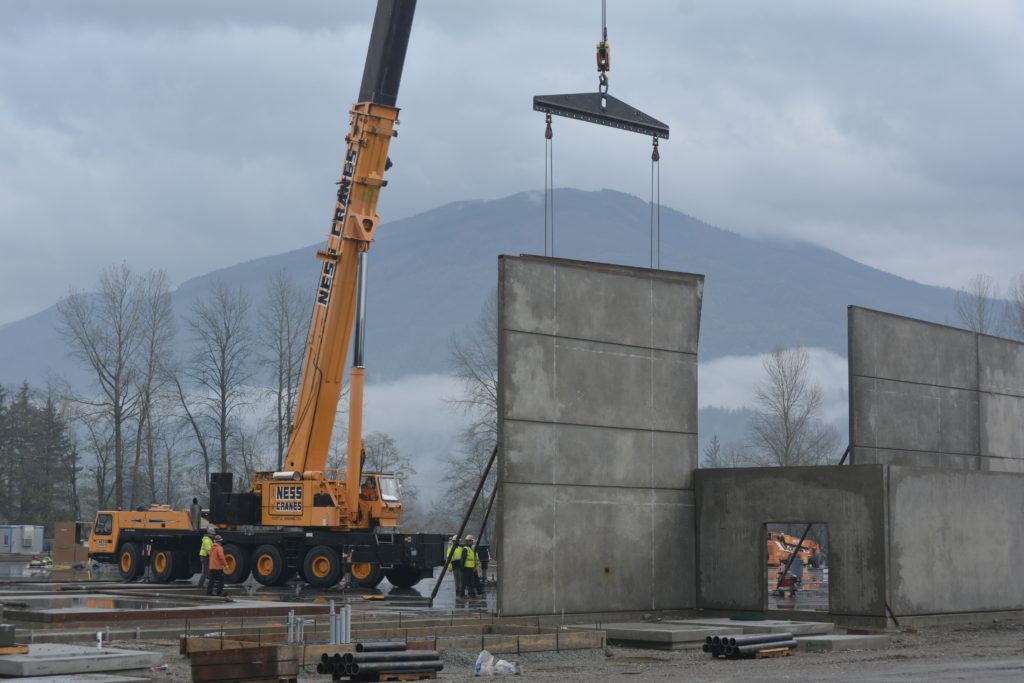
Over the past few decades, many construction methods have remained relatively similar. Despite this, the price of the materials, constructions, and the in-shortage labor skills have continued to increase in price.
The solution for many in the construction industry has been to move towards the use of prefab and modular construction methods. This strategy not only allows contractors to improve construction strategies. But, it allows them to control project budgets better as well. This has been a leading contributor to its popularity over recent years.
What Is Prefab And Modular Construction?
Prefab and modular construction are building strategies that include the off-site manufacturing of certain components. These include things like:
- Roof trusses
- Structural modules
- Floor trusses
- Staircases, elevators, etc.
- Precast concrete foundation walls and slabs
- Wall panels
The elements are cast by a manufacturer and then transported to the site for on-site assembly.
More “traditional” construction methods typically include the casting in-situ elements. It also includes conducting ductwork and millwork, and the production of mechanical components onsite.
Today, prefabricated and modular elements are quite common in construction projects. Elements, such as millwork, come fully developed and equipped with electrics, and prefab concrete elements are readily made with sufficient structural capacity. The on-site building process simply requires a lego-like assembly.
Although there are still many limitations to prefab and modular construction, the benefits are plenty. As the industry grows, the advantages continue to expand and outweigh the disadvantages. To keep you informed about both sides of the construction method, we’ve put together a list of pros and cons for you to consider.
The Pros
Prefab and modular construction are a very popular option due to their benefits for both builders and project managers. Namely, the project feasibility, project timeline, and the cost of construction.
Ease of the build
When integrating prefab and modular construction, onsite laborers can work more efficiently and safely. The building process, typically consisting of assembling components rather than onsite manufacturing, provides less room for potential hazards.
The reduced concern and risk for the health and safety of workers, and the greater working efficiency, result in lower costs.
To top it off, the infrastructure itself is better. It is more likely to be built according to the design and code specifications. This is due to the improved off-site production conditions compared with onsite construction.
Streamlined project timeline
Delays of project construction can mean big consequences and penalties for builders. Using prefab and modular components optimizes the project timeline. The method minimizes delays due to weather, critical path delays, as well as the time of installation.
Because prefab components can come finished, it reduces the amount of time that would normally be spent on them. For example, wall panels for a building could come complete with insulation, windows, doors, etc. The builders would just need to fit them into the building structure and that’s it.
Component costs
Prefab and modular components are manufactured in a workshop office, instead of onsite. Having standardized components produced reduces their costs. Not only this, but contractors don’t have to spend time making the components onsite for each project. This saves a lot of time and costs in the long run.
As the scale and complexity of the project and components increase, it will affect the cost savings on a larger scale.
The Cons
While there are many construction benefits associated with the use of modular and prefab components, there are also some challenges.
Planning and logistics
The use of prefab and modular construction typically decreases the amount of time needed for construction. However, there are some other logistical matters to consider.
For example, contractors must order the components in advance to ensure that they arrive at the site on time. It’s important to consider the logistics of both delivery and onsite storage. If the contractor orders components too late, it could set the project back.
Inspections
Often, the relevant municipality will conduct inspections throughout the different stages of the project. The inspections involve reviewing the inner layout of components and ensuring that each section complies with the design and code.
When projects use prefab and modular components, these inspections can’t always be done to the same extent.
Unions
Typically, workers involved in construction projects belong to a trade union. As the use of prefab and modular construction grows, non-unionized shops that manufacture the components are having a greater contribution to the industry.
As the sector gains more ground, issues of unionized labor rights and other challenges could arise in the industry.
Conclusion
As with any construction method, there are always both pros and cons. As the construction industry continues to develop, methods like prefab and modular construction will improve.
If you choose to use prefab and modular construction methods, always make sure that you hire an experienced contractor to get the job done right. At Chad Fisher Construction, we can ensure that your construction project goes off without a hitch.